
The Principles Of Design
The principals of design are like a general rule book of how to use design elements to create a successful composition. If your not familiar with the elements of design we have another blog post that breaks those down. These principles are used in all kinds of creative work including painting, photography, and you guessed it, interior design! Lets take a closer look at each of the principles and how they can be applied to interior design.
Balance
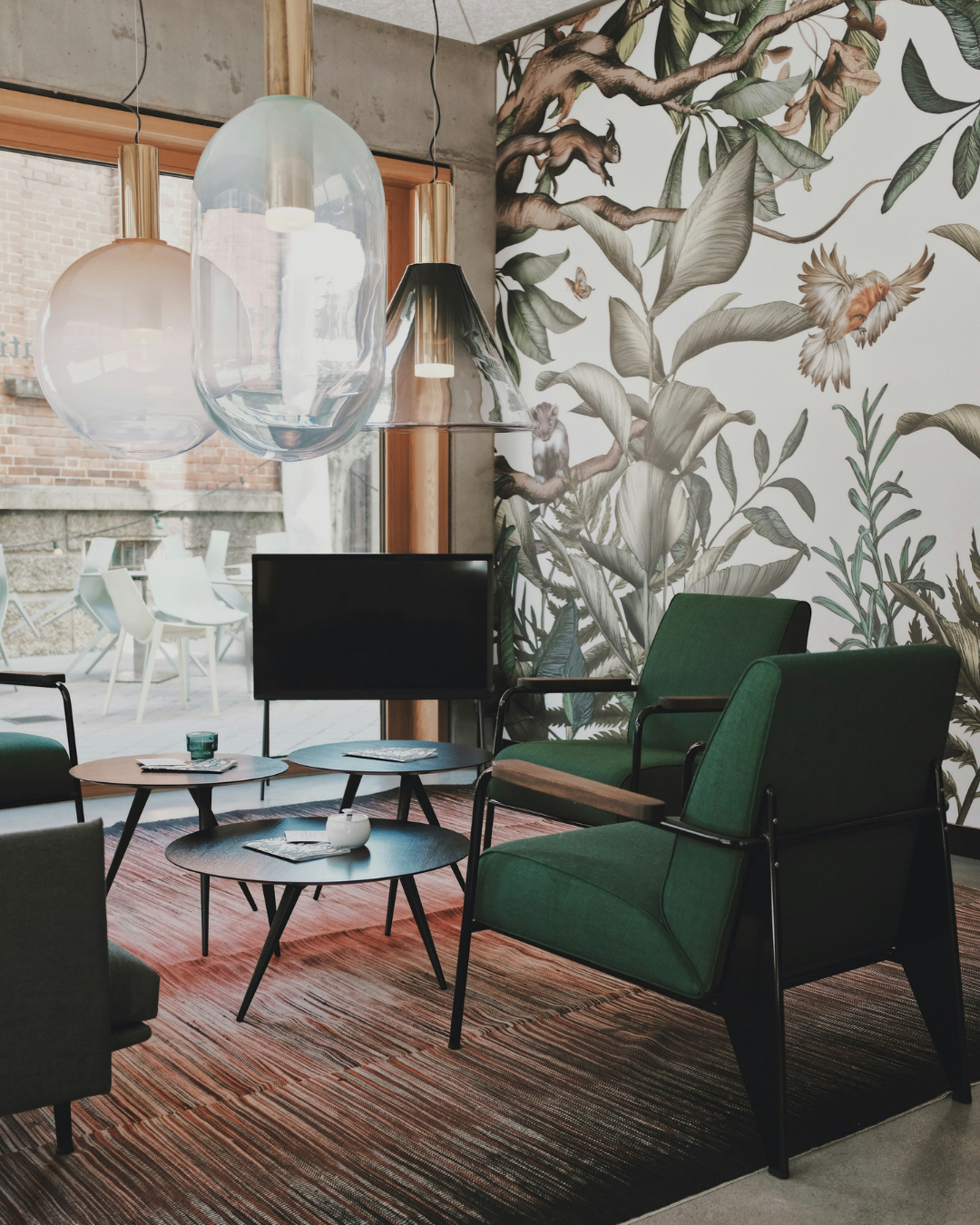
The design principal balance is all about equaling out your positive and negative space. In interior design the positive space would be the furniture, fixtures, doors and trim while anything left blank and empty is negative space. Without enough positive space you will be left with a sad grey room, but without enough negative space a room can feel heavy and overwhelming. A common struggle with interior spaces is the vertical negative space, all of the furniture is on the floor while the ceiling and walls remain blank; thus creating a bottom heavy space. Incorporating long curtains, tall plants, dropped chandeliers and floor to ceiling focal points help to balance the negative and positive space. Applying interesting finishes such as beams, crown moulding, tin, or even coloured paint to a ceiling can also balance negative space.
Colour Palette
Colour is one of the most powerful principles of design, it influences mood, creates visual harmony, and helps define the character of a room. In interior design, colour is used to establish cohesion. By sprinkling repeated colours throughout a room design it connects different elements and creates a unified whole. It can also be used strategically to alter perception, making spaces feel larger, warmer, calmer, or more dynamic. Designers use colour theory to help define a rooms colour palette. The most common colour palettes would be monochromatic, analogous, and complementary. Monochromatic will make a space feel calm, cohesive and simple, analogous will make it feel harmonious and complementary adds interest and personality. We have another blog post discussing colour theory if you would like to learn more!
Contrast
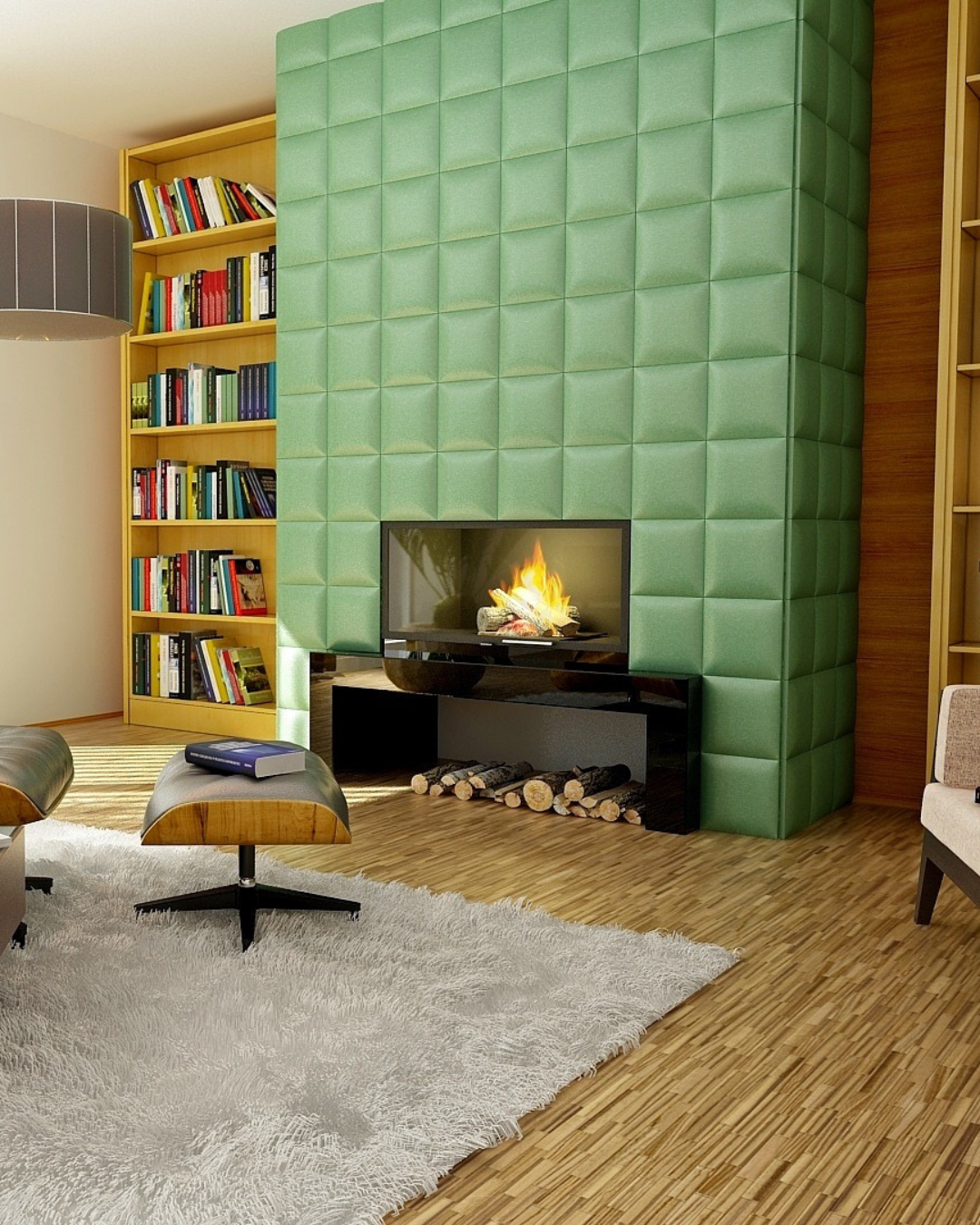
In design, intentionally making elements different from each other creates interest. This is known as contrast. Changing up the value in colour, mixing textures and mixing shapes are great ways to create contrast. Without contrast a space will fall flat. Contrasting very dark and very light tones works great to increase depth in a space. Contrasting smooth hard walls with soft flowing drapery will make a space feel cozy. Lastly contrasting cool and warm hues in a space can bring balance.
Emphasis
What is emphasis and what is that big bright thing in the middle of a room? That is a focal point! It draws your attention providing structure and interest in a space. Emphasis can be created using all the elements of design but often uses colour, texture and scale. A fire place is a great example of a focal point in many homes. It could also be a statement sofa or art!
Rhythm
This principal of design uses repetition of elements to draw your eye through the space. Notice where your eye lands first and what it is drawn to next. Likely it is following repeated colours, shapes, or other elements. This is known as rhythm.
Scale & Proportion
Scale and proportion refers to the size of an element in relation to other elements. People often struggle to match the scale of their space with their furnishings. If you have a large home you will need large furniture, if you are working with a small space you will need smaller furniture. However in interior design everything relates back to human scale. Scale and proportion is also a great way to add interest to a space.. remember what we talked about in emphasis??
Symmetry
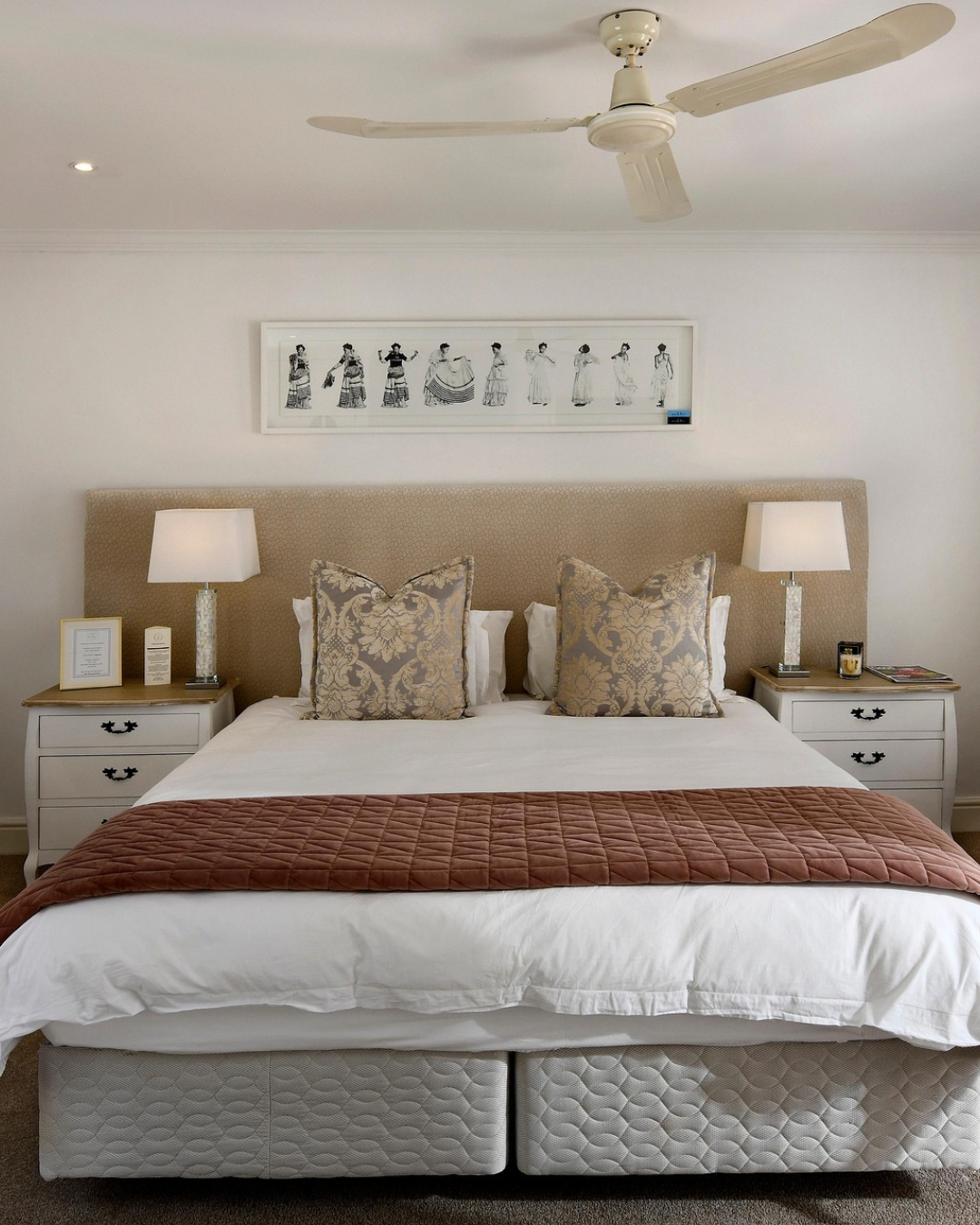
Symmetry is a great way to bring stability and balance to a space. This is the concept of mirroring what is on one side onto the other. Think of bedrooms with matching nightstands and lamps on either side of the bed. Asymmetry is a way of doing this without repeating the exact element but instead balancing it with a similar object. For example if you have a window with tall curtains on one side of you sofa, you would place a large tall plant or tall cabinet on the other side to balance it out.
You may have noticed that many of these principals over lap and work together to achieve similar goals. Its not just guess work, Interior designers spend years studying design theory and concepts like the elements of design to gain a comprehensive understanding of the built environment and to create spaces where people can thrive. Interior Ethos is a professional design service that is ready to help with your next design project. Check out our services today!